
On the misty morning of 30th October 2026, members of Harrogate District Chamber of Commerce and the wider business community gathered at The Old Swan Hotel for a dedicated Budget Breakfast. Taking place just two days after Chancellor John Healey delivered the Autumn Budget, the event brought local directors, founders and professionals together over bacon sandwiches and coffee to make sense of the government's fiscal roadmap.
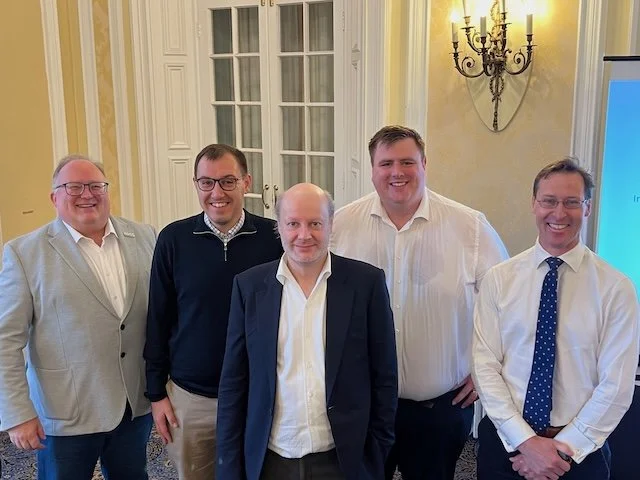
Organised in partnership with Tom Gordon MP, and jointly sponsored by Chamber members Libertas Professional Services and DSC Chartered Accountants, the briefing brought together expert perspectives from across the financial sector, including insights from Denham & Burd Wealth Management. Generously hosted by General Manager Dave Brixton and his team at The Old Swan Hotel, the gathering provided an open forum for honest analysis and practical debate, giving attendees a platform to voice the concerns of the Harrogate business community directly to key decision-makers.
The Macroeconomic Context: Tinkering at the Edges
Ian Howard of Libertas Professional Services opened proceedings by placing the budget within the wider macroeconomic landscape. Reviewing the economic headwinds of the past twelve months, Ian observed that the country remains caught in a cycle of sluggish growth, sticky inflation, elevated interest rates and an persistently tight labour market, compounded by the lingering shocks of Brexit, the pandemic and ongoing international instability.
While the government had made ambitious manifesto commitments around housing and public services, Ian argued that the fiscal statement delivered on Wednesday felt like a budget that merely tinkered around the edges. He pointed out a glaring policy blind spot regarding the small and mid-sized enterprises that generate half of the UK's GDP and employment. Traditional sectors such as retail, hospitality and independent professional services - the backbone of Harrogate's regional economy - saw little in the way of meaningful stimuli.
Examining specific measures through a local lens, Ian noted that raising the Small Business Rate Relief threshold to £18,000 offers marginal assistance in an area like Harrogate where commercial rateable values sit at the higher end of the scale. Similarly, tripling the trading allowance to £3,000 may assist micro-hobbyists, but it does nothing to move the dial for businesses creating sustainable employment. Addressing the targeted reductions for hospitality venues, he remarked that receiving a few thousand pounds back in relief pales in comparison to the revenue generated by a single good evening of trading. For business leaders navigating this landscape, Ian stressed that long-term survival cannot rely on state incentives, urging owners to invest in flexible scenario planning, robust financial forecasting and experienced advisory support.
Taxation and Compliance: The Hidden Burden on Employers
John Garbutt, Director at DSC Chartered Accountants, provided a granular breakdown of the commercial tax measures, summarising the overall package as an exercise in damage limitation. While relieved that Corporation Tax and headline employer National Insurance contributions were left untouched, John expressed deep frustration at the lack of positive incentives designed to encourage business investment and expansion.
A major concern for business owners planning their future exit strategies is the reform to Capital Gains Tax. While the headline rate was not aligned with income tax as some had feared, the government has halved the lifetime limit for Business Asset Disposal Relief from £1 million to £500,000, with gains above that threshold subject to an 18 per cent rate. Turning his attention to the much-heralded Founders Relief, which promises a 10 per cent rate on disposals up to £10 million, John dismissed the scheme as an administrative nightmare. With strict prerequisites demanding 25 per cent year-on-year growth, 25 per cent employee share ownership, and complex retrospective verification of research expenditure, he warned that very few conventional businesses will ever qualify.
John also highlighted several compliance measures that will create significant friction in the coming years. Beyond the upcoming 3.9 per cent increase in the National Living Wage, which creates knock-on increases in pension contributions and employer National Insurance, firms face escalating administrative demands from HMRC. The rollout of Making Tax Digital will require quarterly reporting for self-employed individuals and landlords, while proposed timetable shifts could see businesses paying up to 150 per cent of their normal tax liabilities in 2029 as payments are pulled forward into monthly instalments. With mandatory electronic invoicing on the horizon and HMRC gaining greater powers to collect outstanding liabilities via direct debit, John urged businesses to review their cash flow models and engage with their accountants early.
Personal Wealth: Seeking Clarity in a Complex System
Tristan Burd of Denham & Burd Wealth Management assessed the budget from the perspective of private clients, shareholders and directors. Despite a record 94 individual measures announced in Parliament, Tristan reassured attendees that core wealth accumulation strategies remain largely intact. Crucially, the annual pension allowance of £60,000, the 25 per cent tax-free lump sum entitlement up to £268,275, and the £20,000 cash ISA limit were all preserved without reduction.
However, several subtle changes warrant careful navigation. A new Pension Tax Allowance of £13,037 has been introduced to prevent individuals relying solely on the state pension from being drawn into income tax, but rapid tapering creates an unusually high 53 per cent marginal tax rate for low earners while delivering a maximum overall saving of just £93.40. Furthermore, tax rates on property and savings income have risen by an additional two per cent, pushing top rates to 24, 44 and 49 per cent. For landlords and commercial property owners, Tristan suggested that holding assets within corporate structures or pension wrappers will become increasingly attractive.
On estate planning, the removal of the two-year time limit for distributing defined contribution pension death benefits tax-free following a death under age 75 offers welcome breathing space for executors dealing with complex probate matters. Nevertheless, Tristan reminded the room that the most consequential change - the inclusion of unspent pensions within estates for Inheritance Tax purposes - remains firmly on track for implementation in April 2027. With market reactions muted and bond yields remaining sensitive to future borrowing, he reiterated that proactive, long-term wealth structuring is essential to counteract fiscal drag.
The Westminster Perspective: Short-Termism and Missed Opportunities
Tom Gordon MP offered his candid assessment from Westminster, agreeing that the budget proved to be a muted affair that failed to present a coherent, long-term economic strategy. He criticised the government's approach to cost-of-living relief, citing the blanket £100 council tax energy rebate as a crude, untargeted measure that benefits higher earners while failing to direct sufficient resources to households facing acute fuel poverty.
Tom voiced serious concern over the broader trajectory of public spending, pointing out real-terms reductions in school budgets and a lack of committed capital expenditure for northern infrastructure. While Northern Powerhouse Rail received passing mention, schemes such as the York Area Capacity project, which would enhance connectivity between Harrogate, Leeds and York, remain on pause. He also highlighted the government's quiet departure from its manifesto pledge to equalise the minimum wage across all age brackets, noting that while wage disparity creates social debate, higher entry wages without productivity gains make it increasingly expensive for employers to recruit younger workers and apprentices.
Touching on regional governance, Tom welcomed the principle of devolution and the retention of local tax revenues by regional mayors, but cautioned that areas with higher levels of health and social deprivation could find themselves disproportionately squeezed if central government funding mechanisms fail to balance regional needs. He reaffirmed his commitment to advocating for local enterprise, encouraging business owners to contact his office with case studies demonstrating the real-world impact of legislative changes.
Action Points for Harrogate Business Leaders
Following the morning's presentations, the panel outlined several practical steps and strategic questions for local business owners and directors to address immediately.
Audit Business Rates and Property Reliefs
Local firms should immediately examine the revised Small Business Rate Relief threshold. With the qualifying limit rising from £12,000 to £18,000 alongside tapering arrangements, business owners should consult their advisers to confirm whether their premises now qualify for full or partial relief.
Re-Evaluate Exit Strategies Before April
Owners considering a sale, retirement or succession should speak to their accountants and legal teams without delay. With Business Asset Disposal Relief dropping from £1 million to £500,000 in April, transactions closing after the deadline will incur an additional £30,000 in Capital Gains Tax for higher-rate taxpayers. Accelerating deals over the line before the tax year end could yield substantial savings.
Review Wage Structures and Salary Sacrifice Schemes
With the National Living Wage set to rise by 3.9 per cent, employers must calculate the cumulative impact on employer National Insurance, pension contributions, and supplier pricing. Businesses running salary sacrifice schemes must review employment contracts to ensure that deductions do not accidentally breach legal minimum wage thresholds.
Strengthen Cash Flow and Digital Tax Readiness
With Making Tax Digital expanding and HMRC taking steps toward mandatory electronic invoicing and accelerated monthly payment schedules by 2029, cash flow management must become more predictive. Businesses should upgrade their accounting systems, model potential cash pinches where overlapping tax obligations arise and ensure statutory liabilities are tightly managed.
Shelter Property and Investment Assets
Given the two per cent increase in taxation on savings and property income, landlords and commercial premises owners should reassess how their assets are held. Moving property into limited company structures or commercial property into self-invested personal pensions (SIPPs) can offer valuable tax protection against increasing marginal rates.
Update Pension and Estate Planning Ahead of 2027
The impending inclusion of pension wealth within estates for Inheritance Tax purposes means directors and high-net-worth individuals must thoroughly review their wills, trusts and beneficiary nominations. While the removal of the two-year death benefit distribution window provides procedural flexibility, broader wealth transfer plans require proactive restructuring.
Engage in Forward-Looking Scenario Planning
Rather than waiting for central policy to improve trading conditions, business owners should implement continuous, multi-scenario financial forecasting. Rigorous financial modelling enables businesses to identify cost pressures early, maintain sufficient reserves and seize commercial opportunities while competitors remain reactive.
Questions from the Floor: Sustainability, Social Care and Systemic Reform
The open question-and-answer session brought urgent sector-specific challenges to light. Mark Garrett from Clearpoint Recycling expressed disappointment that only two of the budget's 94 measures referenced sustainability, with policy focused heavily on punitive landfill taxes rather than backing vital processing infrastructure. Mark highlighted that the UK currently faces a one-million-tonne shortfall in domestic sorting capacity, forcing the country to export around 60 per cent of its plastic waste. He warned that intense lobbying from major food retailers around immediate consumer costs has pushed environmental strategy off the political agenda, leaving an essential utility on the brink of collapse.
Sally Daniels from Henshaws raised the ongoing crisis within the social care sector, questioning how proposed fair pay agreements can be implemented without dedicated state funding. Ian Howard echoed these concerns from his own experience in social care governance, describing local commissioning rates as fundamentally unsustainable. With councils already committing more than half their budgets to adult care, the panel agreed that systemic underfunding threatens both charitable providers and the wider NHS.
When asked by the floor to name a single policy intervention that could truly stimulate economic growth, the panel offered diverse solutions. Ian Howard championed a significant cut to the headline rate of VAT, arguing that reducing the tax burden would instantly unlock tens of billions of pounds in vital working capital for trading businesses. Tristan Burd called for legislative stability, urging policymakers to establish fixed, long-term tax roadmaps so individuals and firms can invest with confidence. John Garbutt argued that cultural transformation must begin in schools, calling for enterprise and financial literacy to be embedded in the curriculum to inspire the next generation of business creators. Tom Gordon concluded by highlighting the need to reform compressed wage structures and eliminate punitive tax cliff-edges, making it genuinely rewarding for individuals to take on greater responsibility and grow their businesses.
Looking Ahead
The meeting closed with Tom Gordon and Harrogate District Chamber of Commerce thanking the speakers for their candid analysis and acknowledging the ongoing support of David Brixton and the team at The Old Swan Hotel.
Special thanks were extended to event sponsors Libertas Professional Services and DSC Chartered Accountants for making the roundtable possible. With the national economic framework continuing to evolve, Harrogate District Chamber of Commerce remains dedicated to providing local businesses with the platform, insights and collective voice needed to thrive in challenging times.
We will pick up the conversation about the budget on the 9th of November when we will hear from the Bank of England and John Garbutt. The meeting is open to Chamber members and first time visitors, and we ask you to register your place via the Chamber website.
