
Harrogate Chamber : Rail Transport Briefing
A Report from the President of Harrogate District Chamber of Commerce
March 2026
A Message from the President
Fellow members, colleagues, and friends of the Chamber — I am delighted to share with you an account of two important meetings I attended on behalf of Harrogate District Chamber of Commerce, both centred on the future of rail travel in and around our district.
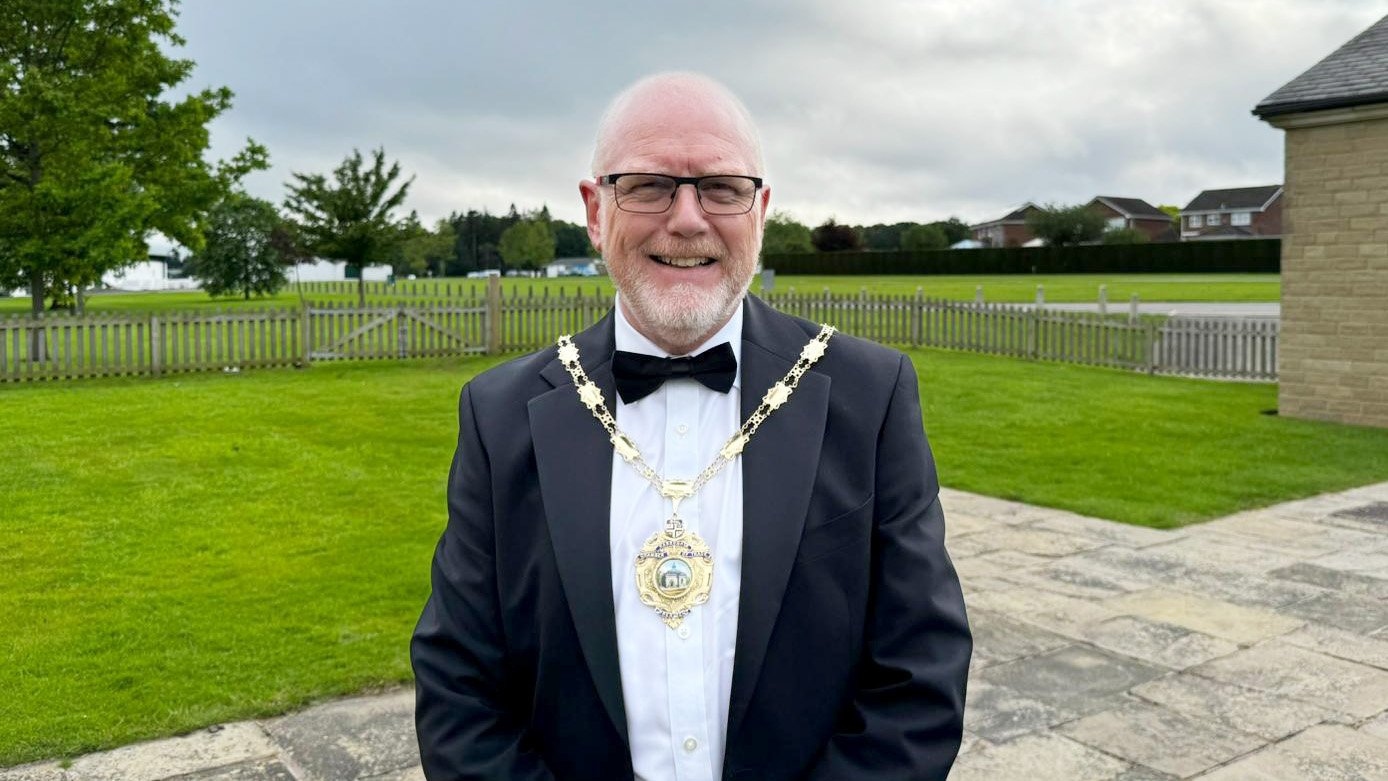
These were not merely technical briefings. They were conversations about the daily lives of everyone who relies on the train to get to work, to visit family, to build a business, or simply to connect with the wider world. Harrogate is a proud, ambitious town, and the railway is central to its future. What follows is my honest account of where we stand, what gives me cause for optimism, and where we must continue to press for better.
The Two Meetings
Meeting 1: Northern Rail User Group Update Call (11th March 2026, online via Teams)
Meeting 2: Harrogate Line Stakeholder Group — HLSG/Chamber Catch-Up (March 5th 2026)
Both meetings brought together rail operators, community representatives, Network Rail, planning authorities, and local stakeholders. I attended as your representative, making sure that Harrogate's voice was heard clearly at the table.
How Are Our Trains Actually Performing?
Let us start with the honest truth: performance on the Harrogate line is not yet where any of us would like it to be. Northern shared figures showing that in West and North Yorkshire, trains are arriving within three minutes of schedule only 79.6% of the time. That means roughly one in five journeys is delayed. Cancellations currently stand at 3.46%.
Some of this is down to known problems with the Class 170 trains assigned to our line — a type of rolling stock that is experiencing reliability issues. Encouragingly, there are very early internal discussions about whether Harrogate-line trains should be maintained closer to home, and whether a different type of train might be better suited to this route. Nothing is decided yet, but the fact that this conversation is happening at all is a step in the right direction.
Northern is also working to rebalance journey times — redistributing the time built in for delays more intelligently across each journey, so that a late departure in one place does not cascade into a very late arrival elsewhere. These are the kinds of quiet, technical improvements that rarely make headlines but genuinely matter to passengers.
Disruption Ahead — Planned Engineering Works
We must be candid: the coming weeks will bring some disruption. Here is what is planned for our area:
22nd March — Bus replacement service between Horsforth and Knaresborough.
29th March — Works at Burley Park; bus replacement between Leeds and Harrogate.
No major Harrogate-area engineering is currently planned for April — which is welcome news.
These works are necessary to maintain and improve the network in the long run, but they do cause real inconvenience. I have asked for these dates to be communicated as widely as possible, so that businesses and commuters can plan ahead.
The London Connection — LNER Services
For many of our members, the direct link to London is a lifeline — for trade, for tourism, for talent attraction. I am pleased to report that from 30th March, LNER will reinstate two important services:
The 14:40 departure from King's Cross to Harrogate.
The 18:33 departure from Harrogate to King's Cross.
These were withdrawn during engineering works, and their return is genuinely good news. Early indications suggest the timetable is performing reasonably well between Harrogate and York, with platform allocation at York now more consistent, making connections more reliable.
LNER is also taking delivery of ten brand-new tri-mode trains — a modern fleet capable of running on electric overhead wires, diesel, and battery power. There are important unanswered questions about how these will be deployed, particularly whether they might serve Harrogate and restore a Sunday service that was quietly cut from six trains to five some time ago. I have asked our stakeholder representative to put these questions directly to LNER and report back.
The Bigger Picture — The Future of the Harrogate Line
This is where I want to spend a little more time, because what was discussed in the stakeholder meeting has real significance for the long-term prosperity of our district.
Electrification and Longer Trains
The Harrogate line is currently planned for electrification somewhere between 2040 and 2049 — admittedly a long way off, but it is on the national plan, and that matters. In the meantime, work is progressing on extending platforms so that longer trains of five or six carriages can serve our stations, increasing capacity for a growing population.
There is a genuine engineering challenge here: a structure at Nesbit (near Nidd) is a significant constraint that limits how much we can extend trains through that stretch. This is being worked through carefully.
Housing Growth and the Railway
North Yorkshire Council's planning maps show enormous potential development sites in our corridor — at Linton-on-Ouse, Hammerton, Cattal, and around Harrogate and Knaresborough. Whilst none of these sites are yet approved, the scale of potential growth places a serious responsibility on planners to ensure that rail and public transport keep pace.
I raised concerns about the sufficiency of planned parking at Maltkiln/Cattal — around 80 spaces for a development of significant scale, when nearby Cattal already sees around 40 cars a day parking on the verge. This is not good enough, and it is a conversation we will continue to pursue through planning channels.
New Stations and a Parkway Concept
There has long been local interest in a parkway station near the A1(M) and A59 junction, offering fast access to Harrogate, York, and Leeds — and potentially to Leeds Bradford Airport. This remains a compelling idea. The costs are substantial, and the pathing complexities on a partly single-track line are real, but the principle is sound and worth pursuing as development pressure intensifies.
People, Community, and What Makes Harrogate Special
I am proud to report that Harrogate is leading the way on community engagement with the railway. Harrogate High School students have been visiting Leeds and York, meeting Combined Authority representatives, and exploring plans for the future. The Mayor attended one of these sessions. This is exactly the kind of relationship between our community and its transport network that builds lasting civic pride.
On a more personal note, I want to record that work is continuing on a permanent and fitting commemoration for Brian Dunsby at Harrogate station. Brian was a much-loved figure in our rail community, and it is important that any tribute is permanent, dignified, and agreed with his family before anything is finalised. Progress has been slow, and I have pressed for this to be moved forward with greater urgency.
I was also moved to hear about Northern's work on diversity and inclusion — three young female engineering apprentices from our region represented the company at Bradford University on International Women's Day. This is the kind of initiative that quietly changes lives and broadens horizons, and we should celebrate it.
What Happens Next — And How You Can Help
Railways are not simply a matter for train operators and government. They are shaped by the communities they serve — by passengers who speak up, by businesses who make the case for investment, and by local voices who refuse to accept second best.
As your Chamber President, I will continue to attend these meetings, ask the difficult questions, and ensure that Harrogate's economic interests are clearly articulated. Here is what I need from you:
Tell us your experiences — if you regularly face late trains, packed carriages, or poor connections, let the Chamber know. Evidence matters.
Engage with planning consultations — as housing development proposals emerge, the transport implications must be challenged robustly.
Support our campaign for better London services — the restoration of a later weekday departure and a fuller Sunday service would benefit businesses, visitors, and residents alike.
I remain optimistic. The conversations I have been part of are substantive, the people involved are largely willing and engaged, and there is a genuine sense that Harrogate's railway future is being taken seriously. But good intentions without sustained pressure amount to very little. Together, we can make sure this town's railway is worthy of its ambitions.
Phill Holdsworth
President, Harrogate District Chamber of Commerce
March 2026
Jargon Buster — Technical Terms Explained
Rail meetings can sometimes feel like a foreign language. Here is a plain English guide to the terms used in this report and at these meetings:
Term - Plain English Explanation
Class 170 / Class 225
Types of train currently used on routes in our region. The Class 170 is a diesel multiple unit (DMU) used on the Harrogate line; the Class 225 is an electric InterCity train used by LNER on the East Coast Main Line.
Tri-mode / Bi-mode
A train that can draw power from three sources — overhead electric wire, diesel engine, and battery. Bi-mode uses two sources. Both allow trains to operate on both electrified and non-electrified track, offering greater flexibility.
TRU – Transpennine Route Upgrade
A major, long-term government infrastructure programme to upgrade the rail line between Leeds and Manchester via Huddersfield. Works affect timetables, replacement bus services, and rolling stock plans across the wider region.
NPR – Northern Powerhouse Rail
A proposed programme of new and upgraded rail lines across the North of England, designed to dramatically reduce journey times between major cities such as Leeds, Manchester, Hull and Sheffield.
GBR – Great British Railways
The proposed new national body that will bring together track ownership (currently Network Rail) and train operations under one roof, replacing the current fragmented franchise system.
Rail User Group (RUG)
A voluntary group of passengers and community representatives who meet regularly with train operators to raise concerns, share feedback, and hold operators to account on performance and service quality.
Modal Shift
Encouraging people to move from one form of transport to another — in this context, from private car use to rail or public transport, for environmental and congestion-reduction benefits.
Modeshift
A Department for Transport-funded programme that works with schools and employers to develop travel plans aimed at reducing car dependency and increasing the use of rail, cycling, and walking.
Access for All
A government-funded programme that provides step-free and improved access at railway stations — typically lifts, ramps, and better-surfaced routes — to benefit passengers with disabilities, prams, and heavy luggage.
Section 106 / CIL
Section 106 (S106) is a legal agreement between a property developer and a local authority requiring contributions to local infrastructure. CIL (Community Infrastructure Levy) is a similar charge. Both can fund transport improvements linked to new housing developments.
Time to 3 / Time to 15
Industry measures of punctuality. 'Time to 3' is the percentage of trains arriving within 3 minutes of schedule; 'Time to 15' within 15 minutes. Both are key indicators of service reliability.
Platform–Train Gap / Level Boarding
The gap between the train door and the platform edge, which can be a significant barrier for wheelchair users, pushchairs, and elderly passengers. Level boarding means the train floor and platform are at the same height, allowing step-free entry.
Selective Door Opening (SDO)
A system that allows only certain doors on a train to open at a particular station — used where platforms are shorter than the train. It can cause delays and complications, which is why extending platforms is preferred.
Pathing
The process of allocating a specific slot on the railway network to a train service — essentially, its reserved space on the track at any given time. On busy or single-track sections, adding new stops or services requires careful pathing.
Combined Authority (CA)
The new West Yorkshire Combined Authority (WYCA) and, in this context, the emerging North Yorkshire / York devolved authority. Combined Authorities have growing powers over regional transport planning and investment.
